
LEARN. BUILD. EARN.
The only Pakistani community where you don't just learn digital tools. You build real income around them — through freelancing, agency work, or your own products.
1K+
Virtual Assistants Placed
with international clients through our network
500+
Business Owners Coached
across freelancing and agency models
PKR
2500
Per Month - All Inclusive
courses, live calls, community, GHL access
Master The Industry Standard Tools


EVERYONE ELSE IS SELLING YOU INFORMATION
The Pakistani digital education space is full of courses that promise results and deliver recordings. You watch, you forget, you get no feedback, and six months later you are back at square one looking for the next guru.
We built something different. Not a course. Not a Facebook group. A full career-building system.
One-time course with no accountability or follow-up
No live community — just a dying comment section
Generic freelancing content everyone has already seen
No practice environment to actually build in
No path from learning to actually making money
No real person behind it who has done what they teach
A CAREER OPERATING SYSTEM, NOT A COURSE PLATFORM
We give you the tools, the practice environment, the live coaching, and the room — everything you need to go from learning to earning.
Monthly Courses, Stacked
One new course every month, each building on the last. Starting with GoHighLevel, then Klaviyo, Mailchimp, ClickFunnels, CloseBot, vibe coding, and more.
Live Calls Every Month
Q&A sessions, live workshops, instructor calls, and CMO-led growth calls. Up to 6 live sessions per month, all recorded for replay.
A Room That Works
Private Gokolab community, a live WhatsApp group, business audits, and invite-only 1-on-1 strategy calls. Not a broadcast channel — an active room.
Live GHL Practice Account
Every member gets access to a shared GoHighLevel account from day one. Build, test, and practice on a live platform — no extra cost.
Real Income Paths
Client placement, JV opportunities with the team, productised offer building, and a direct path from skills to revenue — inside the same ecosystem.
Built for Pakistanis
By someone who has done it, speaks the same language, understands the market, and is building this with you — not just selling to you.
Core Learning Tracks
We focus on high-demand skills that global clients are looking for right now.
Advanced Automation
Become an n8n and Zapier architect. Build complex workflows that automate entire businesses.
Funnel Building
Master GoHighLevel and Systeme.io to create high-converting sales funnels and landing pages.
AI Integration
Learn to integrate LLMs, build custom agents, and leverage AI for real-world business solutions.
More Than Just Code.
We Teach You Business.
We focus on high-demand skills that global clients are looking for right now.
Lead Generation
Proven strategies to find high-paying international clients.
Pricing Mastery
Stop undercharging. Learn to value-price your services.
Agency Building
scale from a freelancer to a full agency owner.
Client Retention
Turn one-time projects into monthly recurring revenue.
Your Growth Path

Skill Acquisition
Master GHL, n8n, & AI tools.

Portfolio Building
Build real-world projects for your showcase.

Lead Generation
Launch outreach campaigns & get leads.

Client Closing
Negotiate & close $1k+ contracts.
ONE TRACK
WHERE ARE YOU RIGHT NOW?
We have two separate groups, separate sessions, and separate focus — because a beginner and an agency owner need completely different things.
BUILDER'S TRACK
For beginners starting from scratch with little to no prior experience in digital work
Start with GoHighLevel from zero — full course included
Shared GHL practice account from Day 1
Twice monthly live sessions with Arham (Q&A + Workshop)
Bi-monthly Instructor Q&A and CMO Growth calls
Closed Gokolab community and WhatsApp group
90% discount on snapshots and GHL tools
Business audit access and invite-only 1-on-1 strategy calls
Client placement and JV opportunities as you grow
Annual on-site event
PKR 2,500
Per month, no contracts
GROWTH TRACK
For small-scale agency owners who are already running a business and want to scale it
Dedicated sessions separate from the Builder's Track
Peer-level strategy sessions — boardroom, not classroom
Deal flow, referrals, and JV access within the network
Advanced tool training — Klaviyo, Uphex, AI, vibe coding
CMO-led growth and acquisition strategy calls
Direct access to Arham for business-level conversations
90% discount on snapshots, tools, and white-label resources
Closed community with other agency owners only
Annual on-site event
PKR 2,500
Per month, no contracts
FROM DAY ONE TO YOUR FIRST INCOME
Join and Get Access
Register at mastermindpakistan.com. Within 24 hours you get access to the courses, Gokolab community, WhatsApp group, and your shared GHL account.
Start the GoHighLevel Course
Begin learning immediately. Practice what you learn inside the shared GHL environment. Ask questions on the WhatsApp group between sessions.
Show Up to the Live Calls
Attend the Q&A sessions, live workshops, and instructor calls. Bring your problems. Leave with answers and a clear next action every time.
Build Your Offer and Go
With the community behind you and the skills in your hands, you build your first offer, land your first client, and start your income journey.
What You Walk Away With
REAL OUTCOMES, NOT JUST KNOWLEDGE
6+
Live Sessions Every Month
Direct access to Arham, your course instructor, and the CMO — every single month. Not a pre-recorded lecture. Real conversations about your real situation.
12+
Tools You Will Know How to Use
GHL, Klaviyo, Mailchimp, ClickFunnels, CloseBot, Uphex, Replit, Loveable, and more. A full toolkit that makes you commercially valuable from any angle.
Income Paths You Can Take
Freelance GHL setups and management for local or international clients
Packaged GHL offers sold to a specific niche at a fixed price
Build tools using vibe coding and sell through JVZoo or direct
Email marketing as a standalone service for ecommerce brands
Get placed with clients through the Mastermind Pakistan network
Launch joint ventures with Arham and the team on new projects
What Makes the Difference
You practice on a live platform from Day 1, not a demo
You are in a room with others on the same journey
You have direct access to someone who has actually done it
Every skill you learn has a clear commercial application
You graduate from Builder to Growth within the same community
Your membership fee becomes invisible after your first client
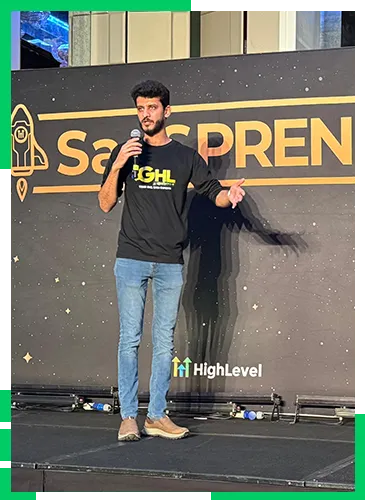
Who Is Behind This
BUILT BY SOMEONE WHO HAS DONE IT
Arham Chaudhry
Founder, Mastermind Pakistan
arhamchaudhry.com
Arham Chaudhry is one of Pakistan's most recognized GoHighLevel experts with 5+ years of hands-on experience — not just teaching it, but building businesses around it.
Through GHLStarboys and Rozi Academy, he has placed over 1,000 virtual assistants with international clients and coached 500+ business owners across Pakistan. Mastermind Pakistan is his way of making that level of access available to everyone — at a price that makes no excuses possible.
1,000+
VAs Placed
500+
Owne4rs Coached
5+
Years GHL Expert
4
Active Ventures
Simple, Accessible Pricing
Invest in your future for less than the cost of a dinner out. No hidden fees.
Monthly Membership
PKR 2,500/mo
Full Access to All Courses (GHL, n8n, AI)
Weekly Live Coaching & Q&A
Access to Exclusive Community
Lead Gen Templates & Scripts
Agency Growth Roadmap
Certificate of Completion
No refund
Grow Together,
Win Together
Mastermind Pakistan isn't just a course, it's a movement. We're building a network of skilled professionals who support each other, share opportunities, and elevate the entire ecosystem.
Weekly live coaching calls with industry experts
Exclusive job board with vetted client leads
Agency incubation program for top performers
Exclusive WhatsApp Support Group
Start Freelancing from Scratch
Don't have a freelancing business already and looking to start one?
Do NOT waste your time selecting the right courses and mentor. We have actually done all the hard work and combined all the resources for you. We created courses that are in high demand in the market. Example? HIGHLEVEL.
GoHighLevel is one of the hottest freelancing niches right now, and we are the biggest players in GoHighLevel.
Join our community to get the free course and become HighLevel certified.
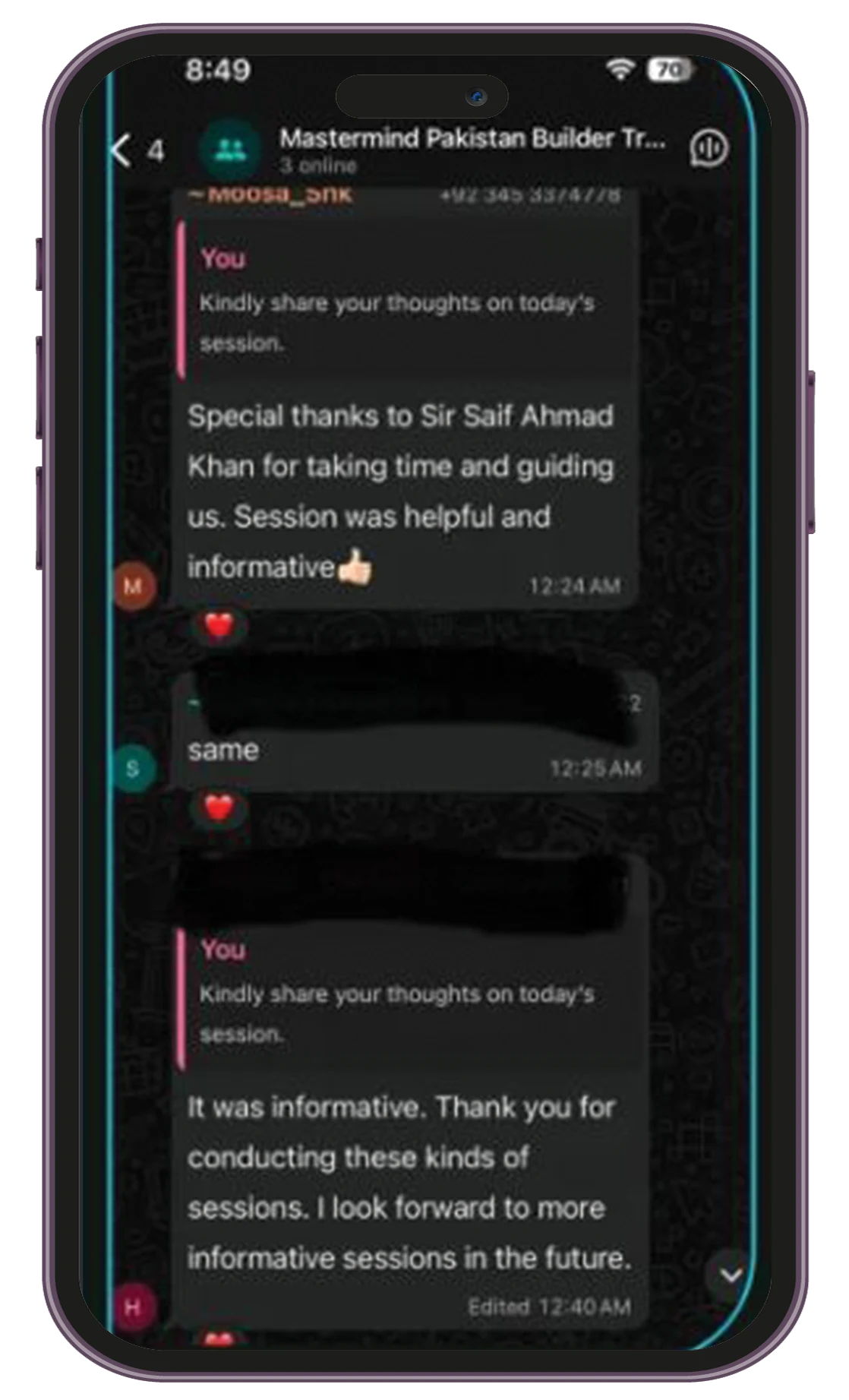
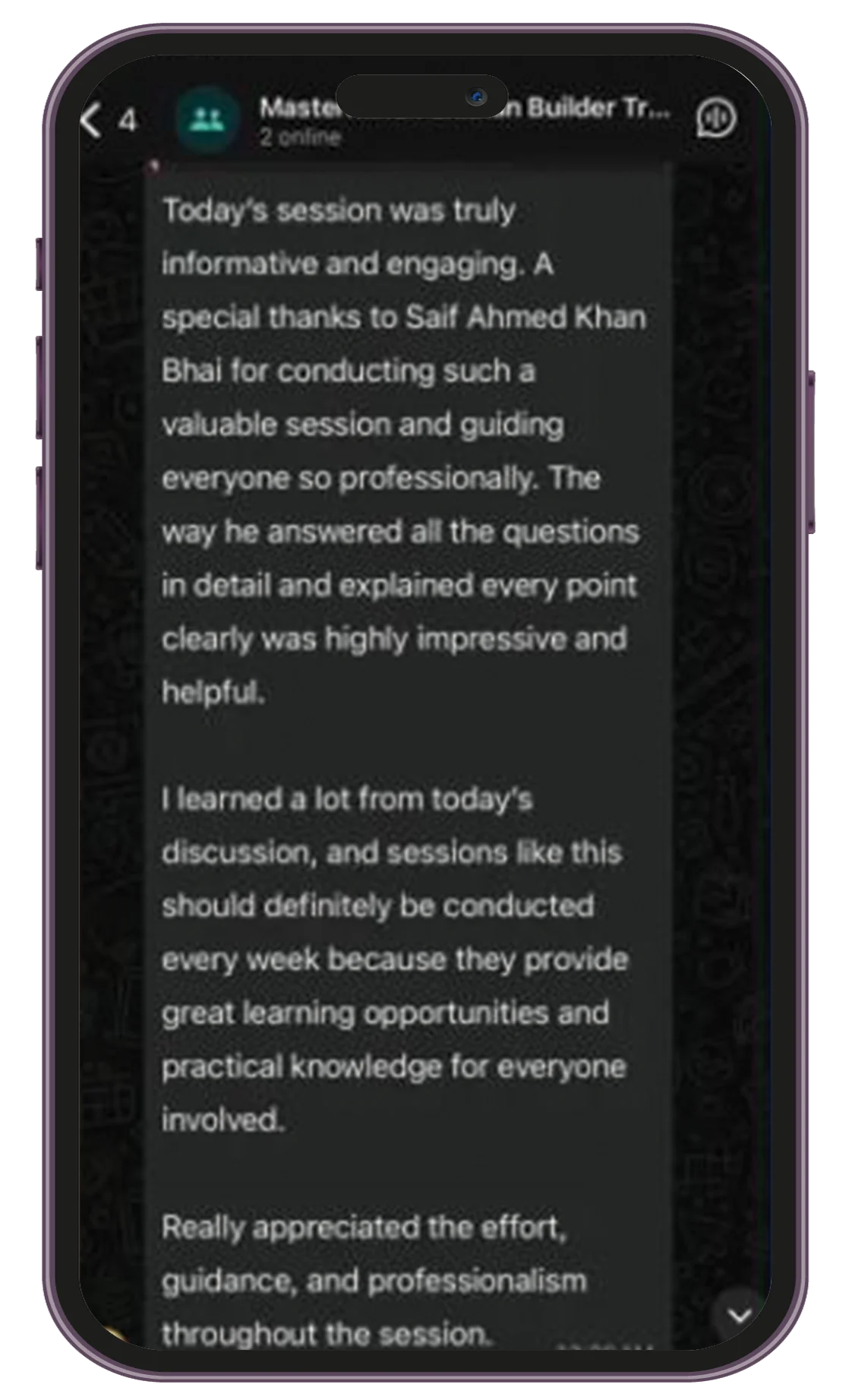
Members Feedback
Latest Events
See What Happens When You Automate and Prioritize 'Me Time'!


READY TO START?
Read the full membership guide, then join at mastermindpakistan.com. Access is granted within 24 hours of payment.
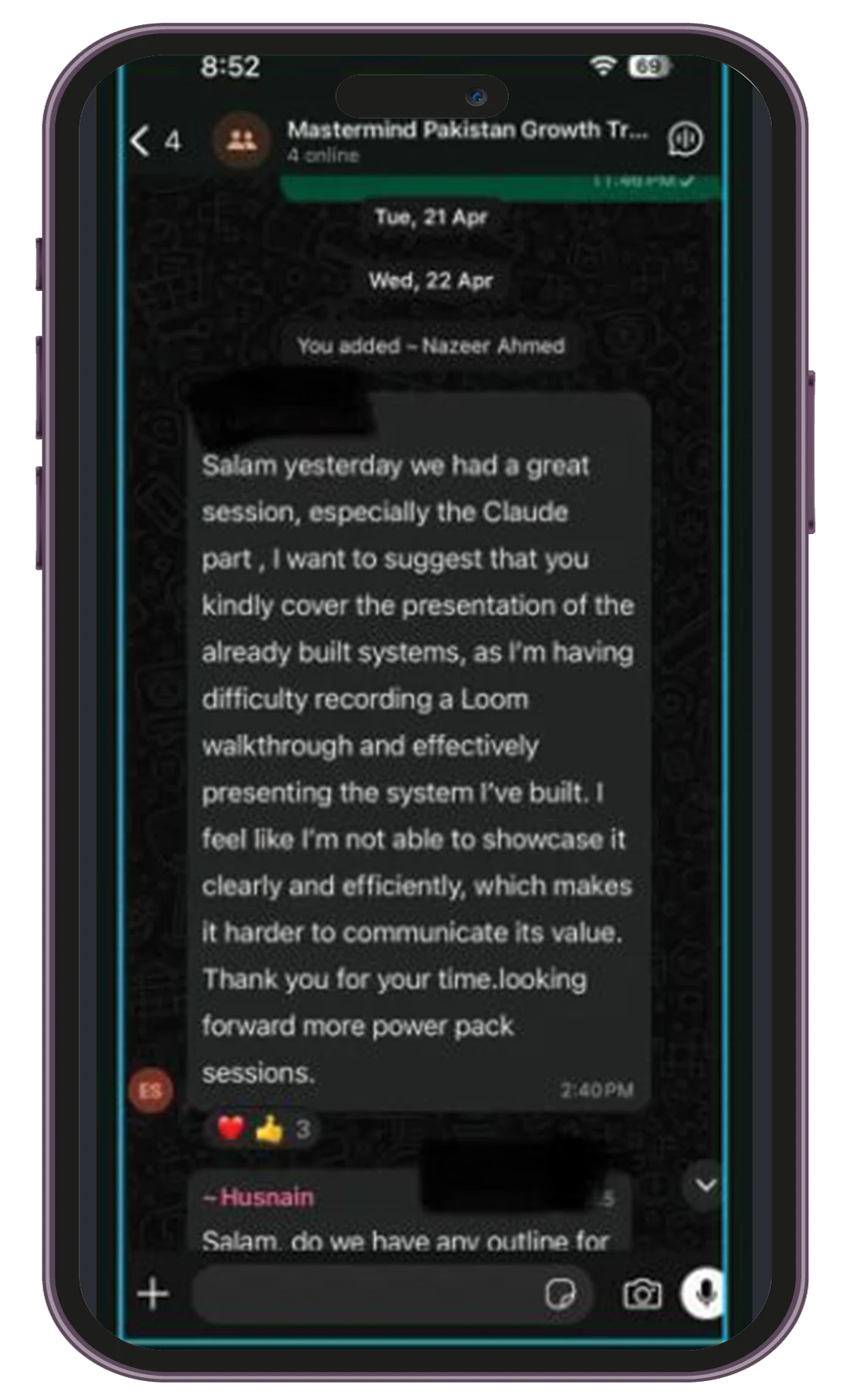
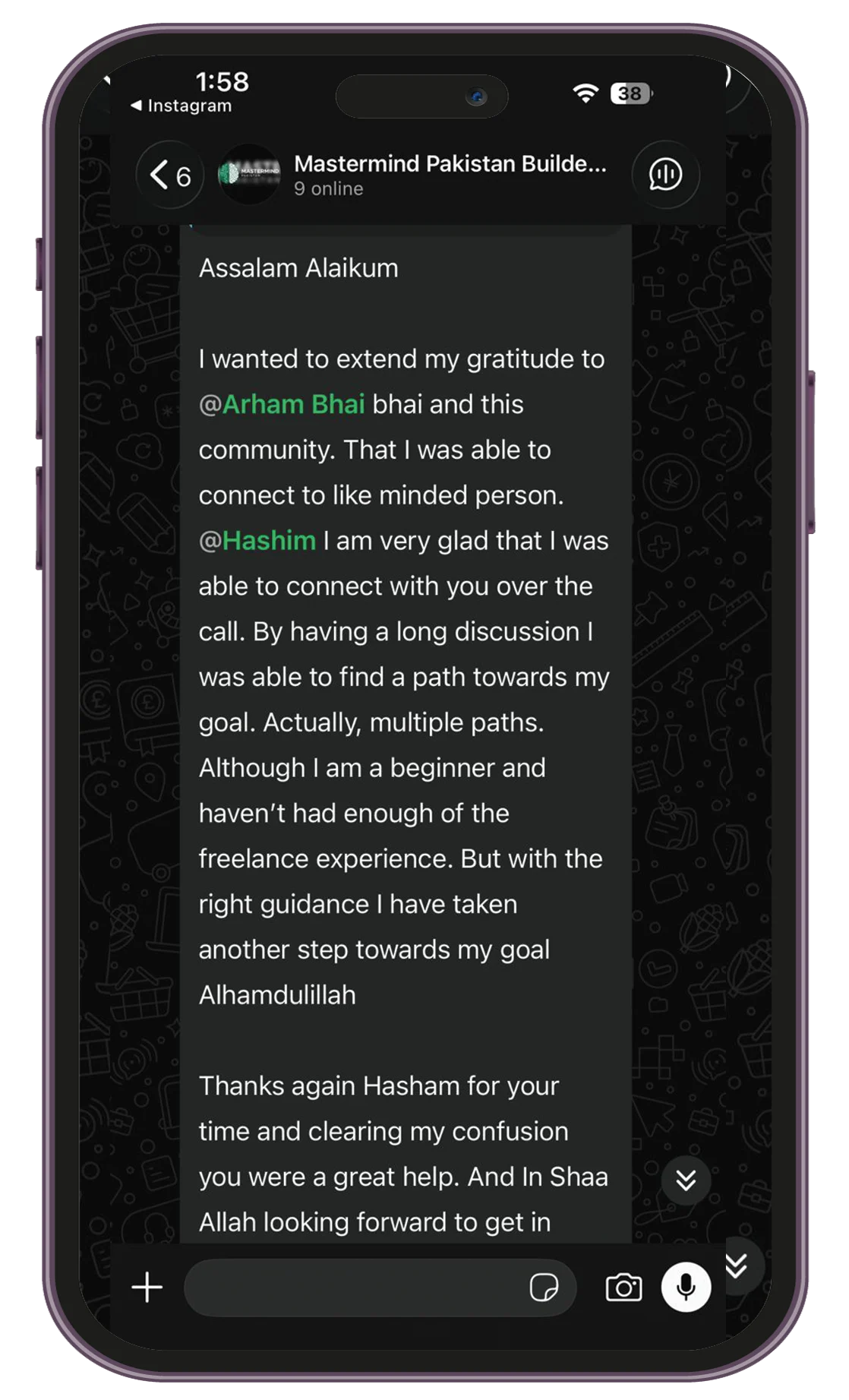
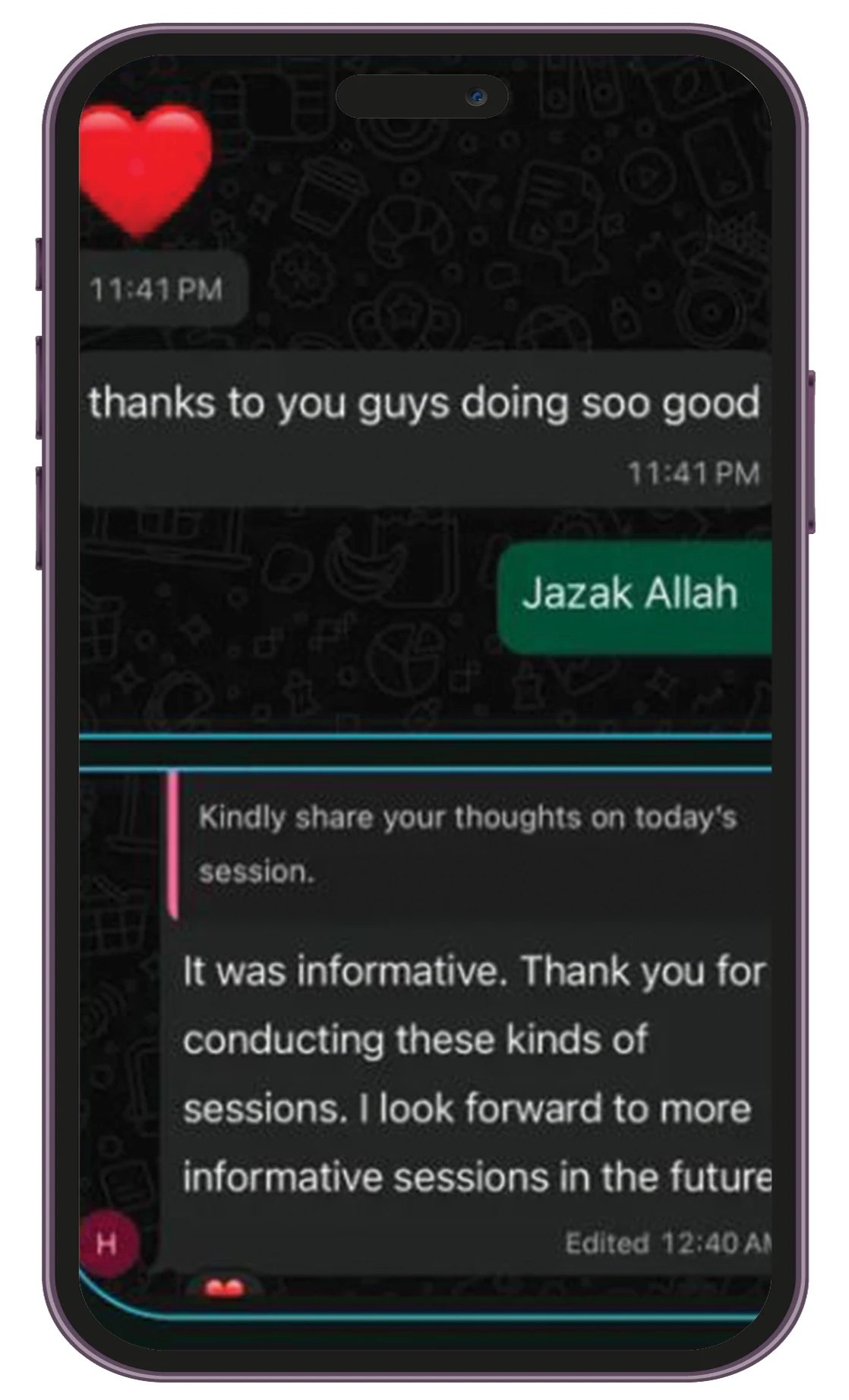
What Our Members Say
Frequently Asked Questions
What is Mastermind Pakistan?
Mastermind Pakistan is Pakistan’s first AI & automation mastermind community empowering freelancers and agency owners to learn high-demand tech tools, grow income, get free courses on emerging technology like Gohighlevel, N8N, Replit, Loveable, etc and support each other’s success.
How is Mastermind Pakistan different from online courses?
Unlike traditional courses, Mastermind Pakistan is a community-first platform with weekly live coaching, peer support, exclusive job leads, and hands-on growth challenges.
Who can join this community?
Freelancers, agency owners, and tech professionals in Pakistan seeking to scale their skills, build business systems, automate workflows, and earn more can join.
What tools and technologies will I get support with?
Members explore tools like GoHighLevel, n8n, Systeme.io, Zapier, and AI integrations to automate work and deliver high-value services to clients.
How does membership work and what is included?
With a monthly membership, you get community access, live coaching, lead gen templates, job board access, and the agency growth roadmap.
Do I need technical experience to join?
No. whether you’re new to automation or an experienced freelancer, Mastermind Pakistan provides tailored guidance and support. However you need to come with the right mindset and willingness to learn
How can this community help me earn more money?
This community is built to help an average freelancer reach the goal of making atleast $2k/Month within 6 Months. This is not only to scale your freelance career but we will also help our community members to build Tools which can be sold to clients as stand-alone products.
Your Emails Are Going to Spam. Here's the Fix.
The reply that never came
Here is a scene that plays out more often than you would believe, so treat it as a sketch rather than one specific person. You spend forty minutes on a proposal for a client in Toronto. You hit send. Nothing. You follow up three days later, polite, one line. Still nothing. You assume the client is flaky, or your price was wrong, or your English gave you away.
Weeks later you discover the truth by accident. The email never landed in their inbox. It went straight to spam, filed between a fake Rolex offer and a "you have won" lottery notice. The client never saw a single word you wrote.
This is the quiet killer of Pakistani freelancing and agency work. When the client does not reply, we blame the offer. Most of the time the offer never reached the person. The message died in the spam folder and nobody told you.
I want to fix that for you. Not with vague advice about "improving your sender reputation". With the actual checklist. The records you need to add to your DNS, the sending domain you should be using, and the small habits that stop a real client from reporting you as spam. Chalo, let us do this properly.
Why this got harder for everyone
Gmail and Yahoo changed the rules in early 2024, and the change has become the permanent baseline. Google now requires every sender who reaches Gmail inboxes to authenticate their email with SPF or DKIM, keep their spam complaint rate under 0.3%, and use a valid sending domain with proper DNS records. If you send more than 5,000 messages a day, the bar goes higher: you also need DMARC alignment and a working one-click unsubscribe. I am summarising this from Google's own bulk sender guidelines, and the numbers matter, so read them yourself if you want the full detail.
Yahoo published the same set of requirements around the same time, and you can see them on Yahoo's sender requirements page. Every sender needs SPF or DKIM and a spam rate under 0.3%. Bulk senders need both SPF and DKIM, a valid DMARC policy, and a list-unsubscribe header so a recipient can opt out from inside their inbox.
The reason this hits Pakistani agencies and freelancers hard is simple. Most of us send email through a marketing platform, not through our own mail server. The platform shares its sending infrastructure, and if the domain you send from is a free one like gmail.com or a half-configured custom domain, the inbox providers have no reason to trust you. The default answer becomes spam.
The free email address trap
If you are sending cold email or marketing from a gmail.com, yahoo.com or outlook.com address through a tool like GoHighLevel, you are fighting a losing battle. Gmail and Yahoo publish DMARC policies that say, in effect, "only we are allowed to send from our own domain". When your marketing tool tries to send from [email protected], the receiving inbox checks that policy and the message fails authentication. Into spam it goes.
The fix is not clever. Send from a domain you own. If your business is called something like Karachi Digital, you should be sending from [email protected], not from a free address. GoHighLevel's own guide on why emails go to spam says the same thing: a dedicated sending domain gives you control over your own reputation, and sending from a free address is one of the most common reasons email lands in spam.
A domain costs a few thousand rupees a year. It is the cheapest deliverability upgrade you will ever buy.
The three records your domain is missing
Once you own a domain, you have to tell the email world that you are allowed to send from it. There are three records involved, and you should understand what each one does, because one day a client will ask and you will want to sound like you know.
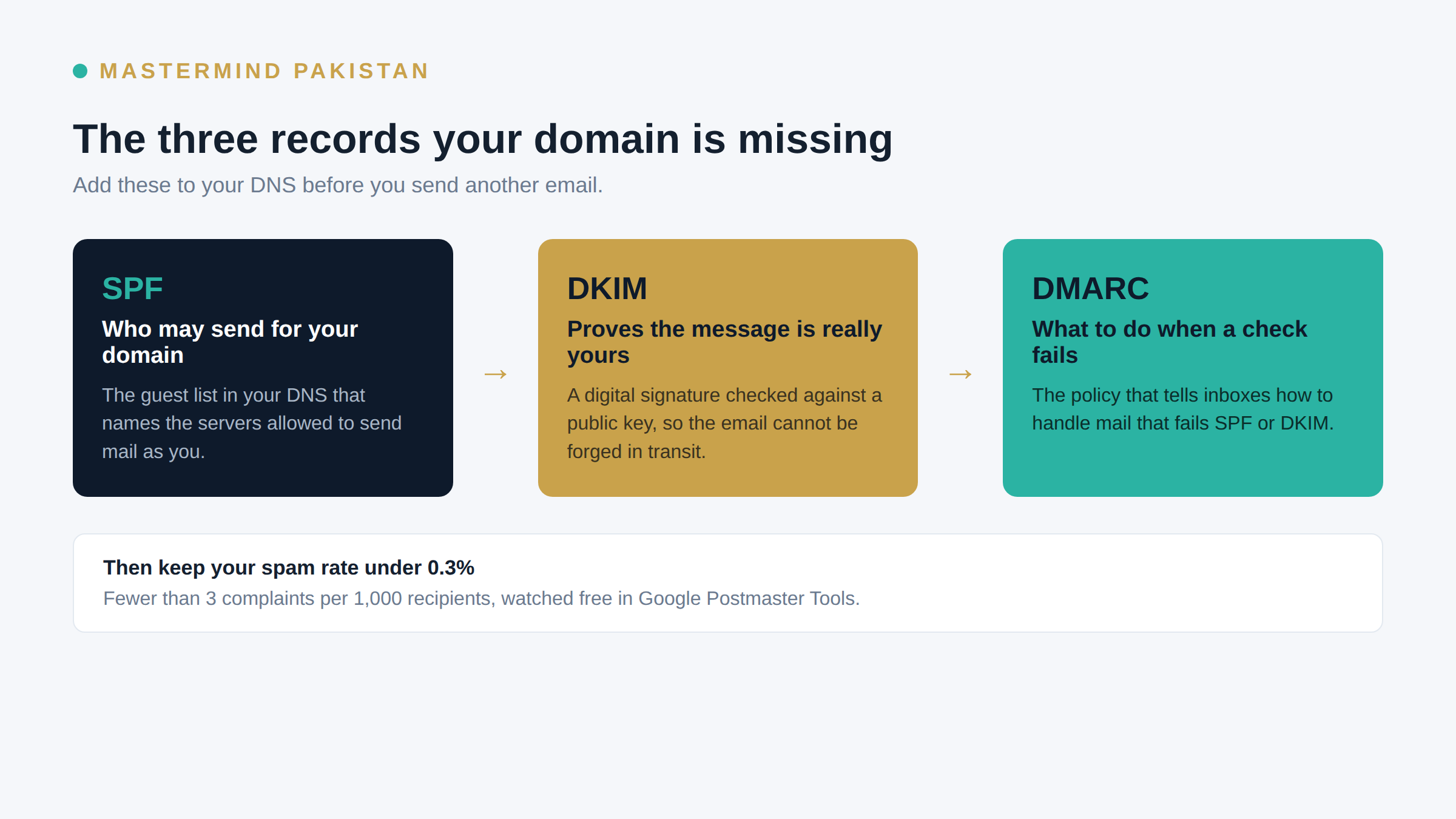
SPF, or Sender Policy Framework, is a line in your DNS that lists which servers may send email for your domain. Think of it as a guest list. If a server not on the list tries to send from your domain, the receiving inbox marks it as suspicious.
DKIM, or DomainKeys Identified Mail, adds a digital signature to each message, signed with a key only you hold. The receiving server checks the signature against a public key in your DNS. If it matches, the message really did come from you and was not altered in transit.
DMARC, or Domain-based Message Authentication, Reporting and Conformance, sits on top of both. It tells the receiving inbox what to do when SPF or DKIM fails, and it checks that the address in your From field matches the domain you actually authenticated. Yahoo asks bulk senders to publish at least a p=none DMARC policy, and Google is moving toward stricter DMARC enforcement for anyone pretending to send from a Gmail address.
You do not need to memorise the acronyms. You need to add the records. Your email platform will give you the exact values to paste into your domain's DNS settings, usually in the domain provider's control panel. In GoHighLevel this happens when you add and verify a sending domain, and the platform walks you through each record.
Use a dedicated sending domain, not a shared one
Even with a custom domain, there is one more decision that changes everything: whether you send from a shared or dedicated sending domain.
A shared domain means dozens of other businesses send from the same infrastructure and the same domain. If one of them spams people, everyone's reputation takes the hit. You can be doing everything right and still land in spam because a stranger in another country ruined the neighbourhood.
A dedicated sending domain is exactly what it sounds like. It is a domain used only by you, with its own reputation. You earn it slowly and it stays yours. GoHighLevel offers this through its LC Email feature, where you create a dedicated sending domain inside the app. It is more work to set up and you have to warm the domain up first, but it is the difference between controlled delivery and rolling dice.
There is a related habit worth adopting, and Yahoo calls it out by name: separate your types of email. Do not blast marketing messages from the same domain or IP you use for invoices, password resets and client replies. A marketing domain that gets a few complaints should not drag your transactional mail down with it. Use one domain for outreach and another, or at least a clearly separate sender, for the boring operational stuff.
The number that actually gets you blocked: 0.3%
Here is the figure that matters more than your open rate. Both Google and Yahoo want your spam complaint rate below 0.3%. That means out of every 1,000 people who receive your email, fewer than three should click "report spam".
Read that again. Three people out of a thousand. It is a brutally tight margin, and it is the reason most cold email campaigns die a slow death. If you are sending to a list of strangers who never asked to hear from you, a few of them will report you as spam. Hit 0.3% and the inbox providers start routing more of your mail to junk, which means fewer replies, which means you send more mail, which means more complaints. It spirals.
You can watch this number yourself. Google Postmaster Tools is free and shows you your spam rate, your reputation and your authentication status across the domains you send from. Set it up before you send another campaign. Yahoo and Microsoft have their own equivalents, and Microsoft's is called SNDS, or Smart Network Data Services.
The uncomfortable truth underneath all of this: if you are emailing people who did not ask, a 0.3% complaint threshold will eventually catch up with you no matter how good your copy is. That is not a deliverability problem. It is a list problem.
Make it easy to leave
This sounds backwards, so let me say it plainly. The easiest way to keep your spam complaints low is to make unsubscribing easy.
When a recipient wants out and there is no obvious unsubscribe link, they do the one thing they know how to do: they hit "report spam". That is the action that damages you. A clean unsubscribe, on the other hand, is a quiet exit that barely registers.
For bulk senders this is now a hard requirement, not a courtesy. Google and Yahoo both demand a one-click unsubscribe for marketing messages, and Yahoo specifically recommends the list-unsubscribe header, which puts an "Unsubscribe" button right at the top of the email in Gmail and Outlook. The recipient never has to scroll to the bottom of your email to find your opt-out link. GoHighLevel has a guide on how the list-unsubscribe header works and why it protects your sending reputation.
So: always include a real, working unsubscribe link in the body, and make sure your platform adds the list-unsubscribe header. Never hide the opt-out or bury it in fine print. A hard unsubscribe is a gift. It removes the one person who was going to report you.
Your list is probably the problem
Here is a sentence I want you to sit with: a clean list of 200 people who want your email will outperform a scraped list of 20,000 who never heard of you.
Most Pakistani freelancers and agencies do the opposite. They buy a list, or they scrape LinkedIn for email addresses, or they upload every contact they have ever touched into one big blast. Then they wonder why their deliverability collapsed.
Every purchased list contains dead addresses. Some of those dead addresses have been turned into spam traps by the inbox providers, and sending to a spam trap is an instant red flag. A list full of role-based addresses like info@ or sales@ is another signal that you are spraying, not targeting. And a list that has sat untouched for a year means half the people have forgotten who you are, which means they will report you when you suddenly appear.
The fix is boring but it works. Send to people who actually opted in or who have a genuine reason to hear from you. Clean your list before every send by removing addresses that bounce. Never re-add someone who unsubscribed. If you are doing cold outreach, keep the volume low, personal, and relevant to each recipient, because that is the only version of cold email that stays under the complaint threshold.
Warm up before you sprint
Imagine you create a fresh domain today and immediately send 2,000 emails. The inbox providers see a brand new sender with no history suddenly pushing volume. The reasonable assumption is spam. That is why warm-up exists.
Warm-up means starting small and building a reputation over weeks. Send a handful of emails on day one, then a few more each day, and let recipients reply, open and mark you as safe. GoHighLevel's email sending guide covers a warm-up schedule, and the platform also offers an automated domain warm-up feature. Treat it as mandatory for a new sending domain, not optional.
This is also why you should not send everything from a domain you care about. If you are going to do high-risk cold outreach at volume, do it from a separate domain you are willing to sacrifice, and protect the domain that carries your client proposals and invoices.
The content signals that trip the filter
Authentication and list hygiene get you into the conversation. Content is the last mile, and a handful of cheap mistakes will still send you to spam even when everything else is right.
An email that is one giant image with almost no text is a classic spam signature. Image-only emails are often used by spammers to hide their text from filters, so the filters punish them. Write real copy and use images sparingly.
A subject line that overpromises, like "earn Rs 500,000 in a week", or uses spammy punctuation such as too many exclamation marks, ALL CAPS or money symbols, will trip both the filter and the reader. A missing or generic From name looks automated. An email stuffed with links, especially shortened links, looks like a phishing attempt.
None of these are hard rules from Google. They are the signals spam filters have learned to associate with junk over two decades. Keep your subject lines honest, your From name a real person, your text readable and your links few. That alone puts you ahead of most senders.
Your one-hour fix, in order
If you do nothing else, do this, in this order. It will not make a bad list good, but it will stop a good list from going to waste.
First, buy a domain you own and send from it. Stop using gmail.com or yahoo.com as your sender address today.
Second, add SPF, DKIM and DMARC records. Your email platform gives you the exact values. Paste them into your domain's DNS and wait for them to verify.
Third, set up a dedicated sending domain if your platform offers one, and warm it up before you send anything at volume.
Fourth, turn on Google Postmaster Tools and Microsoft SNDS so you can see your spam rate and reputation instead of guessing.
Fifth, add a real unsubscribe link and make sure the list-unsubscribe header is enabled.
Sixth, clean your list. Remove bounces, remove role-based addresses, remove anyone who has gone silent for a year.
Do those six things and you have fixed roughly ninety percent of what puts Pakistani senders in spam. The remaining ten percent is copy and targeting, and that is a different conversation.
What this means for your client work
There is a business lesson hiding inside all of this. If you are an agency that runs email marketing for clients, deliverability is now a service you can sell, not just a setting you configure.
When a Pakistani client tells you their emails "stopped working", the first thing to check is never the copy. Check whether they are sending from a free address. Check whether their domain has SPF and DKIM. Check their spam rate in Postmaster Tools. Nine times out of ten the answer is sitting right there in the settings, and you just became the person who found it in twenty minutes.
That same skill is how you land international clients in the first place. If you can walk a foreign founder through authentication, warm-up and list hygiene in plain English, you are no longer "a cheap email guy". You are the person who fixed their revenue. And that is the difference between a one-off gig and a retainer. If landing that first international client is your current problem, I have written separately about how to turn a client's reply into a paid project.
Join Mastermind Pakistan
Deliverability is one of those things that is obvious once someone shows you, and invisible until then. Most people lose months and thousands of rupees figuring it out alone. Inside Mastermind Pakistan we unpack problems like this properly: real numbers, real clients, real Pakistani cases, not theory. If you are building an agency or a freelance business and you want a room full of people who will catch a mistake before it costs you a client, apply to join. It takes about two minutes.
Apply to join Mastermind Pakistan
Frequently asked questions
Do I need to buy a separate domain just for email? Yes, and it is worth it. A domain costs a few thousand rupees a year and gives you control over your own sender reputation. You can use a subdomain of an existing domain if you want to keep things tidy, but the main thing is that you own it and nobody else sends from it.
What is the difference between SPF, DKIM and DMARC? SPF lists which servers may send for your domain. DKIM signs each message so it cannot be forged. DMARC tells inboxes what to do when either check fails. You need all three for serious sending, and bulk senders specifically need SPF plus DKIM plus a DMARC policy.
Why does my email go to spam even though I added SPF and DKIM? Authentication is only one signal. You may also be sending from a shared or cold domain, your spam rate may be too high, your list may contain traps, or your content may look spammy. Work through the checklist in order rather than changing one thing and expecting a miracle.
How many emails can I send per day without getting blocked? There is no fixed number. Google's stricter rules apply once you send more than 5,000 messages a day to Gmail, but a small sender with a bad list will still get filtered. Volume matters less than who you send to and whether they complain.
Does GoHighLevel handle this automatically? Partly. The platform lets you add a dedicated sending domain, walks you through DNS records and adds the list-unsubscribe header. But you still have to own the domain, warm it up and keep your list clean. The tool cannot rescue a bad list.
Can I cold email from a brand new domain? You can, but warm it up first. Sending volume from a domain with no history is a fast track to spam. Start small, build reputation, and keep cold outreach separate from the domain you use for client proposals.

Empowering the next generation of Pakistani tech leaders through automation, AI, and strategic integration skills.